
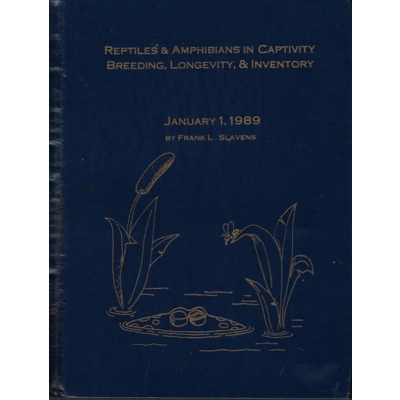
Reptiles & Amphibians in Captivity Breeding, Longevity, & Inventory Jan 1, 1989 by Frank L. Slavens
Units in Stock 1
$60.00 inc. tax
Reptiles & Amphibians in Captivity Breeding, Longevity, & Inventory Jan 1, 1989 by Frank L. Slavens
Format: Hardcover, 474pages
Publisher: Frank L. Slavens, 1989
ISBN: 0
Condition: Good. Some surface scuffing and indents present.
Frank L. Slavens was a long-time reptile curator at the Woodland Park Zoo in Seattle and is best known for compiling and publishing the annual series Reptiles and Amphibians in Captivity. The January 1, 1989 edition was one of many volumes published during the series' run. The series was a valuable resource for the herpetological community, helping to track the health of captive populations and inform conservation strategies. It was particularly useful for managing breeding programs and maintaining genetic diversity within zoo and other private collections.
Like other volumes in the series, the 1989 book was a compilation of data from public and private animal collections worldwide. It provided a reference tool for herpetologists and enthusiasts with key data on captive populations. The book included:
Inventory records: A list of reptile and amphibian specimens held in participating collections, including the animal's location and sex.
Longevity records: Data on the maximum lifespan of specimens in captivity.
Breeding information: Information on the reproductive behavior of captive animals, often including details such as breeding dates and hatching information
Format: Hardcover, 474pages
Publisher: Frank L. Slavens, 1989
ISBN: 0
Condition: Good. Some surface scuffing and indents present.
Frank L. Slavens was a long-time reptile curator at the Woodland Park Zoo in Seattle and is best known for compiling and publishing the annual series Reptiles and Amphibians in Captivity. The January 1, 1989 edition was one of many volumes published during the series' run. The series was a valuable resource for the herpetological community, helping to track the health of captive populations and inform conservation strategies. It was particularly useful for managing breeding programs and maintaining genetic diversity within zoo and other private collections.
Like other volumes in the series, the 1989 book was a compilation of data from public and private animal collections worldwide. It provided a reference tool for herpetologists and enthusiasts with key data on captive populations. The book included:
Inventory records: A list of reptile and amphibian specimens held in participating collections, including the animal's location and sex.
Longevity records: Data on the maximum lifespan of specimens in captivity.
Breeding information: Information on the reproductive behavior of captive animals, often including details such as breeding dates and hatching information
Product Code: HVVTnhw
Product Condition: New

Updating Order Details
Please do not refresh or navigate away from the page!